My Blog
"The Virginian" by Owen Wister
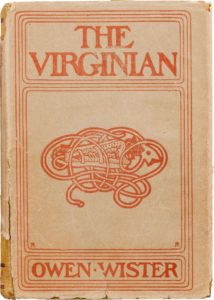 This is the first Western ever written. It set the form for the western. It wasn’t even a genre until this book. The strong, silent type? He created it. Clint Eastwood owes him a debt of gratitude.
Pretty much every stereotype you can think of about cowboys and the old West, Owen Wister created. He took them from reality, to be sure, but he’s the one who codified them. In fact, that can be a problem. I’d start to think, “Oh, that is so trite!” I’d have to remind myself that it wasn’t, when he wrote it. And you know the line, “Smile when you say that”? It’s from this book. And it’s wrong. The actual line is, “When you call me that, smile. I’ll let you find out the story for yourselves.
Because he adheres so strongly to the Western code of honor, he does well for himself out West. When the new – and first – schoolmarm shows up, every cowboy there tries to woo her. Except the Virginian. He had fallen for her well before any of them, but, of course, plays it cool. Once they have all failed, he himself succeeds by being a total gentleman. After a very long courtship, he does win her love and her hand. Of course, on the cusp of the greatest happiness he has ever known, he almost loses it, precisely because he is such a man of honor. That’s all I’m going to say about that.
We never know that name of the first person narrator, either. He’s an easterner and has come out West at the invitation of his friend, Judge Henry. Being such a tenderfoot, he cannot be allowed out without a “guide,” and the Virginian is appointed. He most definitely does not like the job, but it’s his job, so he is honor-bound to do it to the best of his ability. He always does what is right, even when it threatens to destroy him.
At first, the Virginian, well, let’s say doesn’t care for the Easterner. But he is assigned to essentially babysitter him, and he finds there are things to like about the tenderfoot. By the time the Easterner goes home a month later, they have become close friends. This is the only place I have trouble with the book. We know they have become close friends, because he tells us so. We never see it happen. So, it’s never quite real. I kept trying, the whole book, to see them that way. I could tell they were close because of the trips they take together and the letters they exchange. But I never quite believed it.
Wister’s writing is very poetic. He paints wonderful pictures. Talking about the settling of the West, he describes what you would have seen if you had been there. “In front of you passed rainbows of men—Chinese, Indian chiefs, Africans, General Miles, younger sons, Austrian nobility, wide females in pink. Our continent drained prismatically through Omaha once.”
The Virginian strips everything down to it’s bare bones. Of God and religion, he says, “If I can’t do nothing long enough and good enough to earn eternal happiness, I can’t do nothing long enough and bad enough to be damned.”
The story is fiction, but relies heavily on Mr. Wister’s own diaries of his trips out to Wyoming. The model for the Virginian was a man name Charles D Skirden, whom I was not able to find out much about. Oh, one more thing. The book is dedicated to Harvard classmate and good friend Theodore Roosevelt.